
Our second tour
Stonehenge: the turning of the year
A guided virtual-reality walk to Stonehenge as its builders made it, about 4,500 years ago. Visitors arrive on the shortest day of the year, stand inside the complete monument and watch what it was built to show.
- Length
- About 12 minutes
- Languages
- 7, with captions
- Controls
- Gaze only
- Headset
- Meta Quest 3
The midwinter sun sets through the great trilithon
The journey
From midwinter sunset to midsummer sunrise
Salisbury Plain, about four and a half thousand years ago, and then today.
The Avenue, on the shortest day
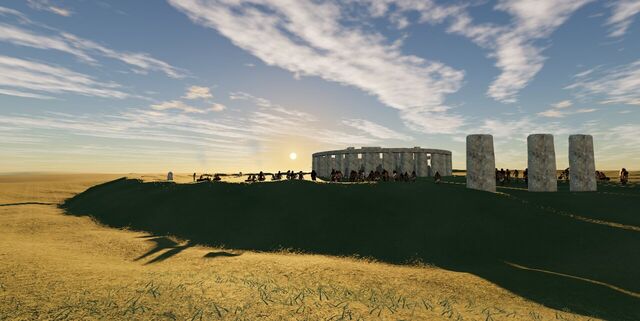
Visitors walk up the Avenue towards the stones in the low afternoon light, among people arriving for the midwinter gathering, past the Heel Stone and its lost partner.
The ditch, the bank and the great circle
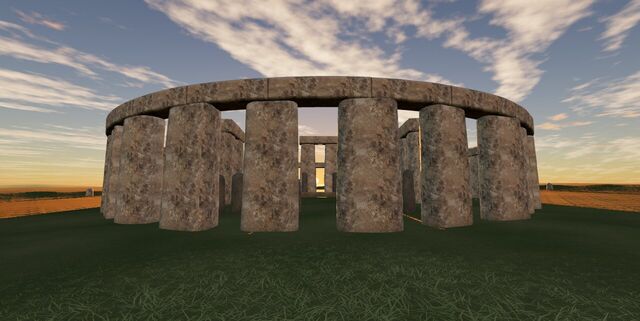
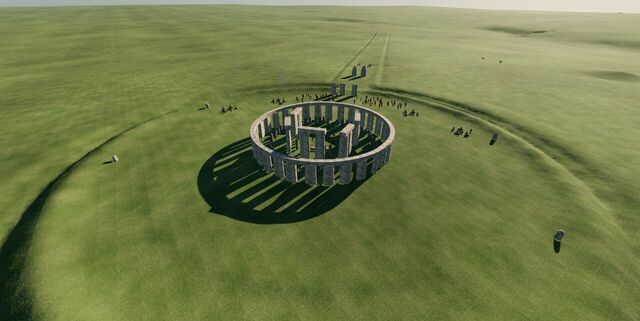
Across the earthwork, already five hundred years old, to thirty uprights carrying an unbroken, level ring of lintels: Stonehenge whole.
The midwinter sunset
Inside, the sun goes down exactly between the two uprights of the great trilithon, more than seven metres high. This is what the monument was built to show.
Bluestones and the longest night
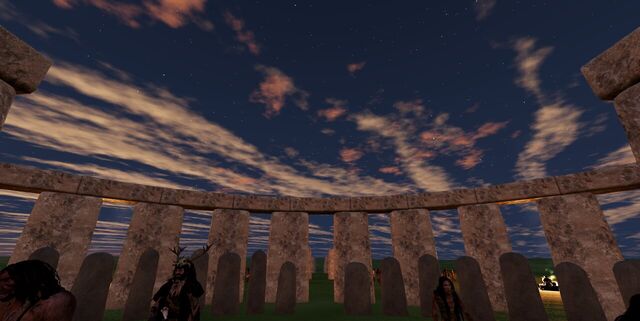
The story of stones brought from Wales and from the north of Scotland, then nightfall, under the stars as the builders saw them.
Half a year in a minute
Winter turns to summer. The midsummer sun rises beside the Heel Stone and its first light runs up the Avenue to the centre of the circle.
4,500 years pass
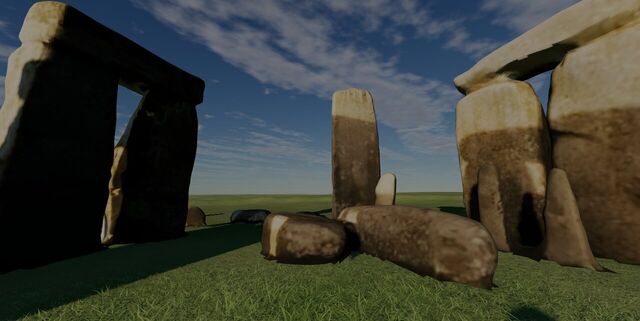
Seen from outside, stones fall and are carried away, until Stonehenge stands as it does today. Visitors walk back in among the stones as they are now.
Accuracy
Built on real measurements
The ground is the Environment Agency's laser survey of Salisbury Plain. Every stone standing today is placed and outlined from a published plan, and the missing ones are restored in their places. The sun's path is calculated for the place and the date, so it sets and rises where it really did, and the stars are turned back 4,500 years. The closing scene uses a 3D scan of the monument as it is now.
Where the evidence runs out, we say so. Nobody knows what the builders wore, for example, so the people in the tour are stand-ins that a curator would help us replace.
This tour is our own demonstration of what MuseumVR can build. It is not currently offered at any museum or heritage site, and it is not connected with or endorsed by English Heritage, which looks after Stonehenge.
Want a tour like this for your site?
We will build one for your museum and trial it for a week, at no cost.